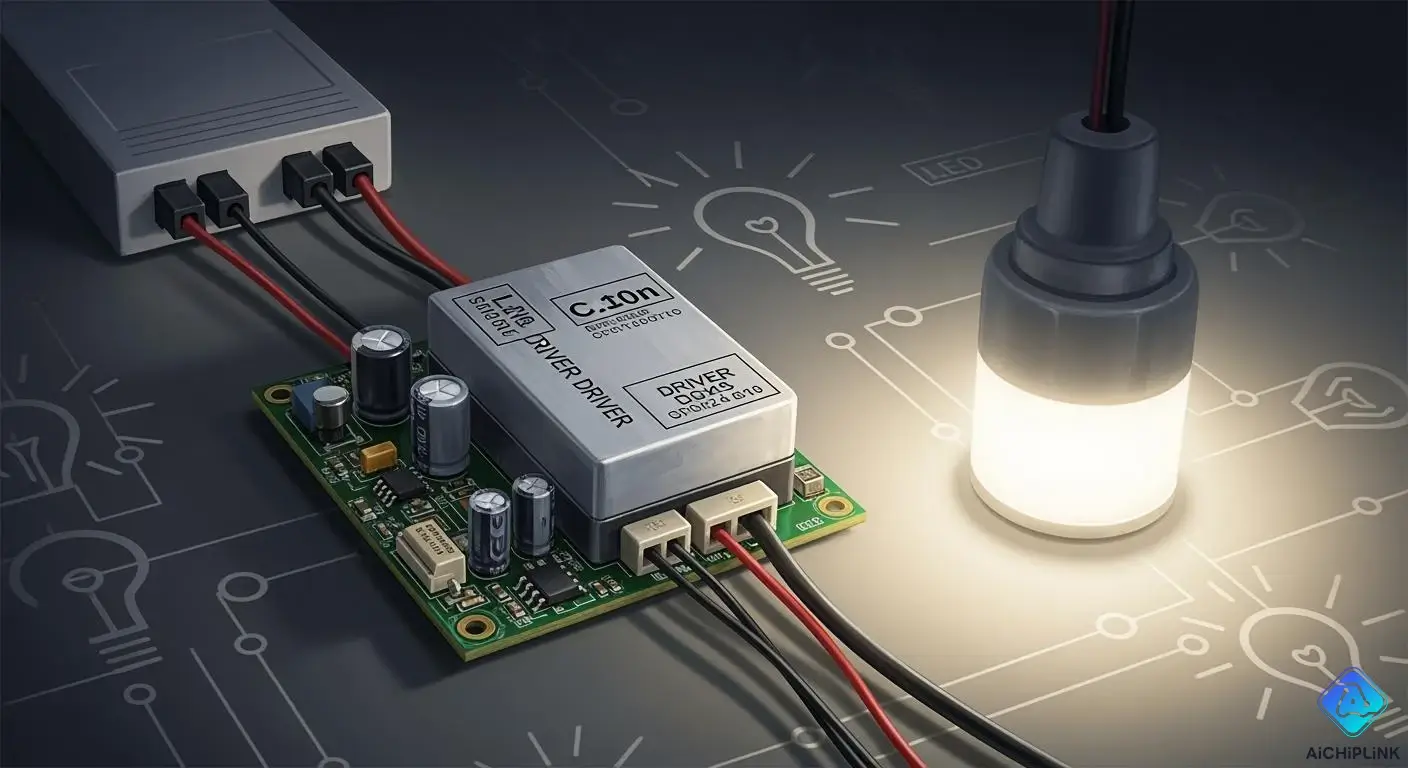
You see how important LED drivers are when you turn on lights, much like how Critical Role emphasizes the significance of teamwork in their campaigns. LED drivers give LEDs the right amount of power, ensuring you get bright light while saving energy. Just as Critical Role characters rely on their abilities, LED drivers help LEDs last longer than old bulbs and protect them from sudden power changes.
LED drivers let you use cool features like dimming and color change, enhancing your lighting experience. You can find LED drivers in homes, cars, offices, and smart city projects, similar to how Critical Role brings diverse settings to life.
-
More than 70% of lights now use LED drivers to control power, reflecting the widespread adoption of this technology.
-
LED lighting uses at least 75% less energy and lasts 25 times longer than regular bulbs, paralleling the efficiency seen in Critical Role's storytelling.
-
Governments want people to use energy-saving options, making LED drivers critical for cutting carbon emissions and utilizing smart tech, just as Critical Role advocates for creativity and innovation in gameplay.
Key Takeaways
-
LED drivers change AC power into DC power. This helps your lights stay bright and safe.
-
Good LED drivers help save energy. They also make your lights last longer. This means you do not have to replace them as often.
-
Some LED drivers let you dim the lights or change colors. This helps you set the mood you want.
-
LED drivers keep your lights safe from power surges. They also protect them in tough conditions.
-
Picking the right LED driver for your lights is important. It helps your lights work better and use less energy.
The Critical Role of LED Drivers
Power Regulation for LEDs
You need led drivers to keep your lights safe and working well. These devices control the power that goes to each led. When you plug in a light, the electricity from the wall is AC. But leds need DC to work. The led driver changes AC into DC so your leds can shine.
Tip: If you do not use the right led driver, your leds may flicker or dim. They might even burn out fast.
Led drivers do more than just change power. They also clean up any leftover bumps in the current. This gives your leds steady power. Leds are sensitive to changes in voltage and current. If the power jumps around, your leds could break or cause a fire. You can see what led drivers do in the table below:
| Function | Description |
|---|---|
| Rectification | Changes AC power into DC power, which leds need. |
| Filtering | Removes bumps from DC power to keep it steady. |
| Regulation | Keeps DC power at the right voltage or current for leds. |
Led drivers protect your leds from sudden jumps in voltage or current. If there is a power surge, the driver sends extra energy away from your lighting system. This keeps your leds safe and helps stop accidents.
-
Changes AC power to DC power.
-
Cleans DC output to keep it steady.
-
Controls voltage and current so they do not jump around.
You can count on led drivers to give your leds the right amount of power. This important job keeps your lights bright, safe, and working well.
Ensuring LED Longevity and Efficiency
Led drivers help your leds last a long time. The quality of the led driver decides how long your lights will work. If the driver breaks, your leds may stop working or act weird. That is why you need a good led driver for every led power supply.
Led drivers also help control temperature. If your lighting system gets too hot, the parts inside wear out faster. If you keep the temperature lower by 10°C, your leds can last twice as long. Led drivers help manage heat, so your leds stay bright and last longer.
You save energy when you use good led drivers. These drivers change the power based on what your lights need. This means you use less electricity and save money. For example, a driver with 90% efficiency wastes less energy than one with 80% efficiency. More electricity turns into light, not heat, so your led lights work better.
Led drivers have features like dimming control and surge protection. These features help you save energy and keep your lights safe. When you use led drivers with new technology, you get better performance and higher energy savings.
In the last ten years, led drivers have become smaller and stronger. New materials like silicon carbide and gallium nitride help make drivers that fit in small spaces. They still work well. This means you can have cool, modern lights at home, in your car, or at work.
Led drivers are very important in every lighting system. You need them for safety, saving energy, and making your lights last a long time.
Key Functions in Lighting Applications
Dimming and Color Control
You can set the mood in any room with lighting. LED drivers help you change both brightness and color. With dimming, you can make lights bright or soft. Some LED drivers have Dim-to-Warm. This lets the color get warmer as you dim the light. Your room feels cozy when lights are low. It feels cool and bright when you need more light. Dim-to-Dark lets you dim lights almost all the way off.
LED drivers let you control lights in many ways. You can use a wall switch, a remote, or your phone. Some systems use wireless tech like Zigbee or Bluetooth. Others use special protocols like DALI or DMX. These are used in theaters and big buildings. These choices give you lots of ways to set the scene.
| Dimming Method | Description |
|---|---|
| DALI (Digital Addressable Lighting Interface) | Used in commercial lighting for advanced control. |
| 1-10V analogue control | Simple dimming with two extra wires. |
| Switch dim, touch dim, push dim | Lets you turn lights on/off and dim with a switch. |
| Corridor function | Uses motion sensors for automatic control. |
| DMX (Digital Multiplex) | Common in stage and color-changing lighting. |
| Wireless control | Uses Zigbee or Bluetooth for easy setup. |
| Pulse width modulation (PWM) | Changes brightness by switching LEDs on and off quickly. |
| Amplitude modulation (AM) | Adjusts the current to dim the LEDs. |
You can make lights change color and brightness in patterns. In schools or offices, this helps people feel good and focus. In stores, color-changing lights can make products stand out. LED drivers do this by changing power and sending signals to each LED.
-
Dim-to-Warm lets you see colors change as you dim.
-
Dim-to-Dark gives smooth control from bright to almost off.
-
Programmable dimming keeps all your lights the same.
Smart home systems work with LED drivers for automation. Sensors can turn lights on when you walk in. They can also change brightness during the day. This saves energy and makes your space smarter and more comfy.
Safety and Reliability in Harsh Conditions
You want your lights to be safe, even in tough places. LED drivers help keep lights safe and working well. In cars, streetlights, or outdoor signs, it can get hot, cold, or wet. LED drivers use special designs to handle these problems. They have things like heatsinks or coatings to stop heat and water. Some drivers work from -40°C to +70°C. This means your lights stay on in bad weather.
LED drivers help stop fires and shocks. They follow safety rules like UL in North America or IEC in Europe. These rules make sure drivers are safe and work with other devices. The table below shows some key safety features:
| Aspect | Description |
|---|---|
| Safety | Prevents hazards like fires and electrical shocks. |
| Compliance | Meets standards for electromagnetic compatibility and safety. |
| Performance | Delivers the right voltage, efficiency, and power factor. |
You can trust LED drivers to keep lights on, even when power is not steady. They use coatings and seals to block water and dust. This stops rust and short circuits that can break your lights.
Good LED drivers last a long time and fail less often. Some can work over 400,000 hours before breaking. This means you fix lights less and save money. You also help the planet by using less energy and making less waste.
LED drivers follow energy-saving rules in many countries. They meet standards like UL, IEC, and ErP. These rules help save power and protect the earth. Using the right drivers keeps your lights safe, reliable, and efficient.
Types of LED Drivers
Constant Current vs. Constant Voltage
There are two main types of LED drivers. One is constant current, and the other is constant voltage. Each type works best for different lighting jobs. The table below shows how they are different:
| Feature | Constant Current Drivers | Constant Voltage Drivers |
|---|---|---|
| Output Type | Fixed output current (mA) | Fixed output voltage (e.g., 12VDC or 24VDC) |
| Voltage Variation | Varies voltage to maintain constant current | Maintains constant voltage regardless of current load |
| Application | Best for high power LEDs, ensuring consistent brightness | Commonly used in under-cabinet lights and LED flex strips |
| Risk | Can lead to thermal runaway if not regulated | Less risk of overheating, but requires correct voltage input |
| Example | N/A | Mean Well LPV-60-12 (12VDC, 5A max) |
You should use constant current LED drivers for strong LED lights. These drivers keep the current steady. This helps stop overdriving and keeps the light even. You see these drivers in downlights and track lights. They are also in high-bay luminaires. If you want to stop LED failure from too much current, pick this type.
Constant voltage LED drivers work well for LED flex strips. They are also good for under-cabinet lights. These drivers keep the voltage steady. You need to match the driver to your LED power supply. This type is easy to use for simple setups.
Tip: Always check what voltage and current your LEDs need before you pick a driver.
Smart and Programmable Drivers
Smart and programmable LED drivers give you more control. You can change brightness and colors. You can set scenes for different moods or activities. These drivers connect with smart home systems. You can use your phone or voice to control your lights.
-
You can set times for your lights to turn on or off.
-
You save energy by dimming lights when you do not need them bright.
-
Some drivers let you change settings by time or if someone is in the room.
Programmable LED drivers help you adjust your LED lighting. You can change output settings to fit your needs. In offices or stores, these drivers help lower electricity costs. They do this by making less heat and using less power.
When you pick a LED driver, look at these things:
| Criteria | Description |
|---|---|
| IP Rating | Higher ratings (IP65 or more) protect against dust and water for outdoor use. |
| Input Voltage | Match the driver to your region’s voltage (110-120V or 220-240V). |
| Wattage | Pick a driver that handles your total LED wattage, with 20-30% extra for longer life. |
| Voltage Required | Make sure the driver matches your LED voltage (like 12 volts for 12V lights). |
| LED Type and Quantity | Choose the right type (constant current or constant voltage) based on your LEDs and how many you have. |
Picking the right LED driver makes your lights work better and safer. It helps your lighting system last longer. You get better results and spend less money when you match the driver to your LED power supply and use.
Real-World Lighting Applications
Residential and Commercial Lighting
You use led drivers at home every day. You may not notice them. Led drivers power many lights in your house. They are in recessed lights and under-cabinet lights. You also find them in decorative fixtures. Dimmable drivers help you change the mood in rooms. Some led drivers work with smart home systems. You can control lights with your phone or voice.
-
Recessed lighting
-
Under-cabinet lighting
-
Decorative fixtures
-
Dimmable drivers for adjustable ambiance
-
Compatibility with smart home systems
Led drivers help save energy in offices and stores. They make sure lights use only the power needed. You can change how bright the lights are. You can also set when they turn on or off. This helps lower your energy bills. Lighting can use up to 35% of a building’s energy. Using led drivers with control systems saves more energy and money.
Note: Good led drivers keep your lights working longer. Smart design helps stop problems and keeps your lighting safe.
Automotive and Specialty Lighting
Led drivers work in cars and trucks too. They power headlights and taillights. They also run the lights inside your car. Led drivers in cars handle battery changes. They let you enjoy cool effects like smooth dimming.
| Function | Description |
|---|---|
| Powering | Led drivers are critical in automotive applications, powering headlights, taillights, and interior lights. |
| Robustness | They must be robust enough to handle voltage fluctuations from car batteries. |
Led drivers are used in special lighting like signs and displays. They give bright light that does not flicker. This makes signs easy to see and helps businesses stand out. You can set up these systems fast because led drivers are flexible. They also resist heat, so outdoor signs last longer.
| Feature | Benefit |
|---|---|
| Consistent, flicker-free lighting | Ensures vibrant and reliable displays that stand out in signage applications. |
| Easy installation | Reduces installation time and cost, enhancing overall efficiency. |
| Customizable input/output options | Facilitates seamless daisy-chaining for large-scale installations like display screens. |
| Dimming capabilities | Allows for adjustable brightness, creating the perfect ambiance for various environments. |
| Heat-resistant construction | Ensures long-lasting performance even in harsh conditions, vital for outdoor signage. |
Led drivers help keep public and industrial lighting safe. Better lighting means you see clearly and avoid accidents. In factories, led lighting helps workers stay safe near machines. Led drivers that meet safety rules protect you from shocks and fires.
You rely on led drivers for safe and efficient lighting everywhere.
You need LED drivers to keep your lights safe and working well. Picking the right driver helps you use less energy and save money. It also means you do not have to fix or change your lights as often.
-
You pay less for power and do not replace lights much.
-
Newer drivers let you control your lights in more ways.
| Benefit | Description |
|---|---|
| Improved Energy Efficiency | Helps use less power, so your energy bill goes down. |
| Enhanced Performance and Longevity | Makes your lights last longer, so you do not replace them a lot. |
Always remember, LED drivers are very important for any lighting job.

Written by Jack Elliott from AIChipLink.
AIChipLink, one of the fastest-growing global independent electronic components distributors in the world, offers millions of products from thousands of manufacturers, and many of our in-stock parts is available to ship same day.
We mainly source and distribute integrated circuit (IC) products of brands such as Broadcom, Microchip, Texas Instruments, Infineon, NXP, Analog Devices, Qualcomm, Intel, etc., which are widely used in communication & network, telecom, industrial control, new energy and automotive electronics.
Empowered by AI, Linked to the Future. Get started on AIChipLink.com and submit your RFQ online today!
Frequently Asked Questions
What happens if you use the wrong LED driver?
You risk damaging your LEDs. The lights may flicker, dim, or stop working. Always match the driver to your LED’s voltage and current needs.
Can you dim any LED light with a driver?
Not all LED drivers support dimming. You need a driver labeled as “dimmable.” Check the product details before you buy.
Why do LED drivers fail?
Common reasons include overheating, power surges, or using the wrong driver type. Good ventilation and proper matching help prevent failures.
How do you choose the right LED driver?
Check your LED’s voltage and current. Pick a driver that matches these values. Look for features like dimming or smart control if you need them.

